Céline Cremer's death was an accident, not her fault
- Confluence of errors?
- A short trip to a waterfall
- Lost
- Tips to have options even when plan A doesn't work
- Conclusion
Confluence of errors?
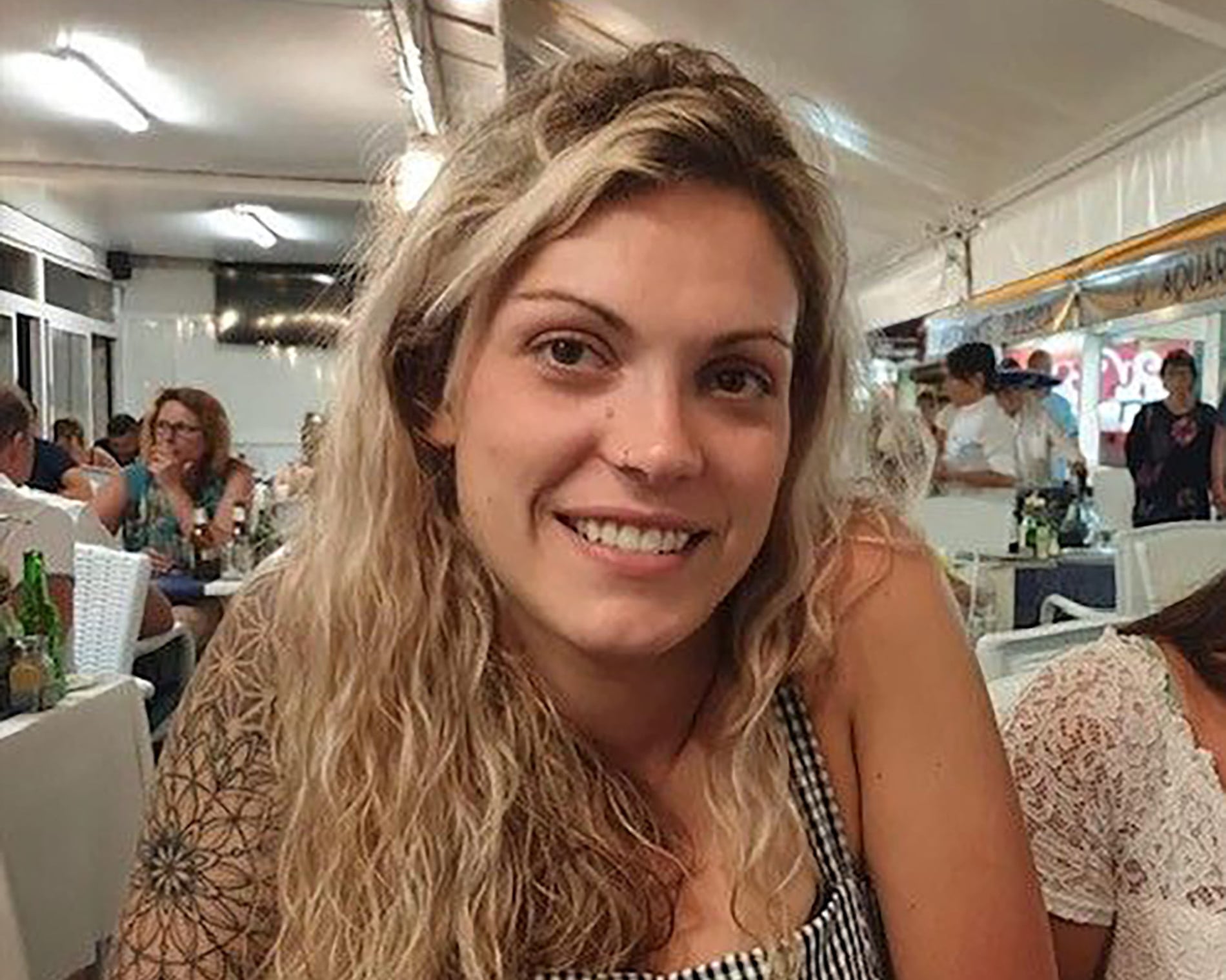
Céline Cremer set off on a walk at Philosopher Falls in Tasmania’s remote north-west on 17 June 2023 and was reported missing 10 days later. Her body was not found until the end of January 2026. We now have the official findings and they are being reported all over the world.
The Guardian leads with the prominent headline: ‘Confluence of errors’ led to Belgian tourist Celine Cremer’s death in Tasmanian wilderness, coroner finds.
This is a quote taken directly from the Coroner's report. Céline is blamed, as if she made errors. But it is much healthier to see what happened as a tragedy rather than as the result of a series of errors on her part.
A short trip to a waterfall
In short, what happened? She was about to leave Tasmania, and it was one of her last days of sightseeing. She parked her car in the car park at Philosopher Falls. She left the car park at 2:19pm. It took her about 23 minutes to reach the Falls, arriving at 2:42pm. It was a relatively mild day, but she had a fleece, a Ghanda jacket and a beanie. She had nothing waterproof with her, but she was just going to walk to the waterfall, that's all. It was a wide, gravelled track that was easy to follow.
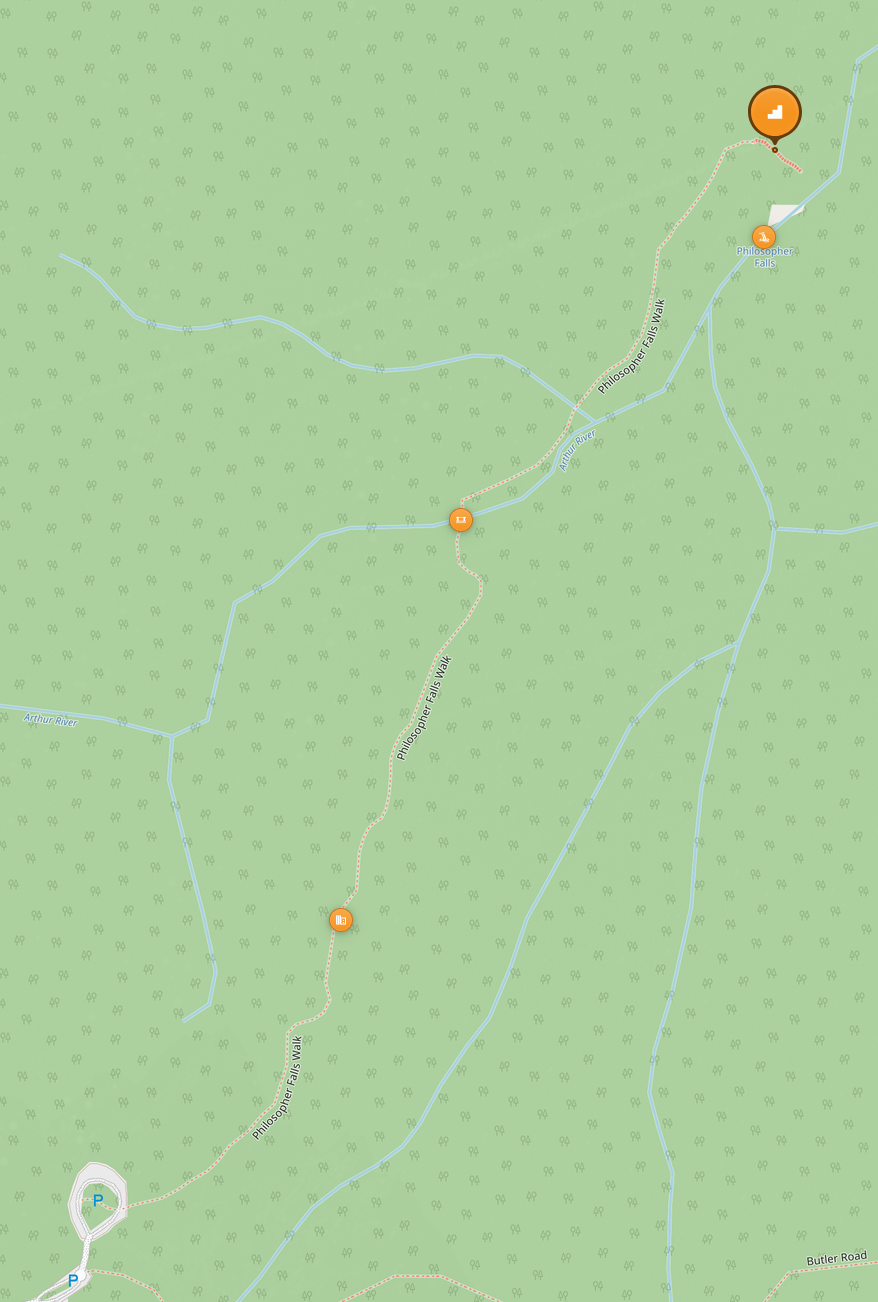
The trip was very short, and she had plenty of time left to see a bit more. On her return, she saw a side track. This had never been an official trail, but she didn't know that. This trail led to Magnet Dam, which she likely reached, possibly around 3.30pm. It is not clear whether she noticed the daylight fading, but sunset was now less than one and a half hours away at 4:54pm, and even under the best of circumstances she would arrive at her car in the dark.
My position is that taking this side trail was deliberate; it does not seem likely that she was unaware she was no longer on the easy-to-follow walk to Philosopher Falls. She had time, it was daylight, and she just wanted to explore a bit more. So she took just another trail, unaware it wasn't one.
Look at the map: the route from Philosopher Falls to Magnet Dam is just a trail along Seven Mile Creek.
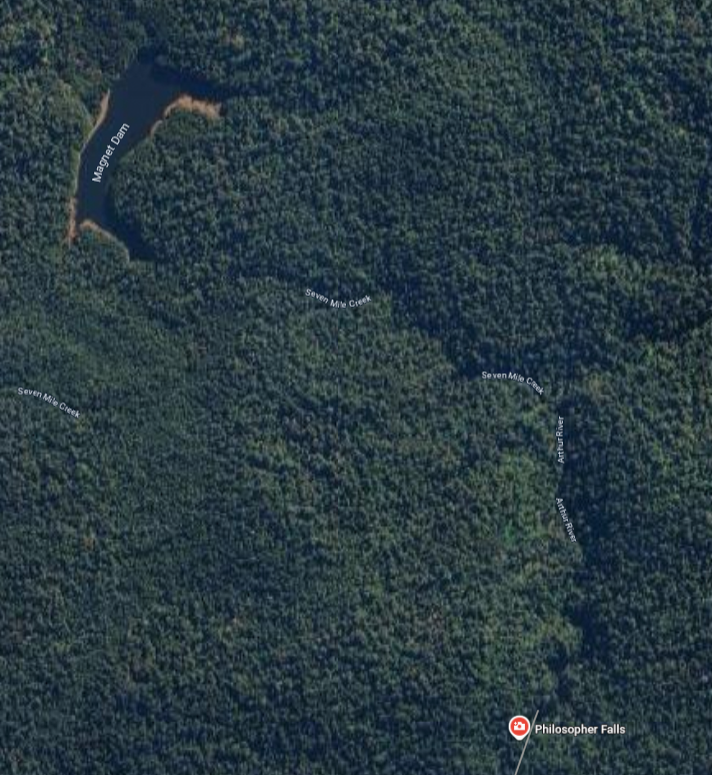
But this wasn't an official track and had never been one. A private investigator later observed that it was in poor condition and became invisible to the naked eye in some sections.
Lost
After returning from Magnet Dam at around 3.30pm, she lost the trail, possibly around 3:49pm. I'm not sure she realised she was in a survival situation at this point. Survival was still possible, but the window had now become very narrow. She tried to bushwhack her way to the car, I suspect. But then at around 4:19pm she lost her phone, her only means of wayfinding, and a poor one at that, given that she was using only Google Maps.
She now found herself in a life-threatening situation with no good options. I'm sure she desperately tried to find her phone.
At this point she should have stopped and used the little remaining daylight to find a place that would keep her dry. Keeping dry is your highest priority here. Number two is keeping warm, but you can't keep warm if you are wet. Stay away from watercourses, as they are much colder, so ideally you're up a bit higher. The goal is to wait for daylight. She may have done this, but the next day would bring her biggest enemy: about 20mm of rain. She did not have a rain jacket with her, but would this really have helped? She would have needed rain pants and waterproof boots. She had a Gore-Tex waterproof jacket in the car, but trust me, rain gear only works for so long.
And even with daylight, she was lost. Which direction should she go? In the bush you go in circles. No one knew where she was. No one could reach her. The following days were very cold, and there was sleet and snow. Survival was no longer really possible.
So it is at this point that I have to object to blaming Céline for her "errors". She just went to see a waterfall. Do you notify anyone when you're visiting a waterfall? You don't, right? She didn't bring a rain jacket, because it wasn't raining, and she wasn't planning an overnight trip. She just followed a side trail as she had some time to spare, not knowing this wasn't an official trail and that she was now on a bushwalking adventure.
No one brings a torch when doing a 23-minute walk to a waterfall. No one brings a first aid kit. The trip was within her abilities. She had a phone, fully charged.
She walked alone, but who hasn't walked alone to a waterfall? She wasn't on a bushwalking adventure. It was just a little side trip to get out of the car and see things.
So what about you? What preparations could she have made?
First of all, you need to know your limitations. Women score measurably lower on tests of spatial navigation. Training and experience can overcome this difference, but then there's the bush. If you are lost in the bush, you are likely to walk in circles. It doesn't matter whether you are a man or a woman: navigating through the bush is extremely difficult. I've experimented with this myself by recording my tracks while trying to navigate, and I walked in circles despite being sure that I was heading straight and in the right direction.
Secondly, there's a risk of hypothermia. There is no measurable difference between men and women in this respect. But you cannot maintain your core body temperature for long. At 11 °C, you will definitely need a jacket. Shivering helps, but it is tiring. Your body can keep you awake, which helps to maintain your core temperature, but not sleeping is not conducive to sound decision-making.
This is a long-winded way to say that if you are lost in the bush in this place at this time of the year, there are no good options without additional preparation.
Tips to have options even when plan A doesn't work
The easiest tip for any adventure in remote areas is to reach your destination at noon. That gives you plenty of options. Reach the top of the mountain before noon. Reach the furthest point before noon. Reach the halfway point before noon. If that's your plan and you do not make it, your destination is likely too far away, and you still have time and daylight to return. Going to an area you don't know, such as Magnet Dam, two and a half hours before sunset was not the best decision.
My second tip is to think like a survivalist: what is your plan B? There is always a plan B, even if you don't think about one. For her, plan A was not to get lost. Plan B was what to do if she got lost.
Her plan A depended on not losing her phone. There was no plan B. If you lose your phone outdoors, it's very hard to find it again. Ask me how I know. Ideally, your phone case has a colour that's easy to find outdoors, such as pink or orange. Céline got this right: her phone case was mauve. She would have found it if she had lost it along a defined track, I'm sure. But she was too far from her phone to retrace her steps.
And that's where an emergency communication device comes in. It wasn't cheap in June 2023, but there are better options now. A Garmin inReach Messenger is $300 USD. It is not cheap, but in my opinion it is essential if you travel alone. Plan A when travelling alone is being able to rescue yourself. With a Garmin inReach Messenger, plan B is pressing the SOS button. What is plan B without that button?

You can get an Garmin inReach Mini 3 Plus for $450 USD. That even gives you a map and voice communication.

Besides a device, you need a service plan as well. That's quite cheap these days: just $8 USD per month, with no annual subscription, just a monthly fee that is easy to cancel. Garmin, why do people in Australia (and New Zealand) have to pay $20 AUD?
Two communication devices give you two options. You can lose one, and survive.
You can even rent them, but renting isn't cheap; owning one gets cheaper quickly.
Do not carry one loose in your pocket like your phone; attach it to your backpack with a carabiner.
For people earning a salary like Céline's, a Garmin inReach Messenger might still be quite expensive. So here is my final tip if all you can afford is a phone: install an offline map on it. The problem with Google Maps, which Céline used, is that you need a cell tower connection to see the map. Install OsmAnd and download the map for the area. Now you always have a map wherever you are. It works without data. It works without cell towers. It just needs GPS, which is available everywhere on the planet.
Conclusion
So those were my tips:
- Arrive at your furthest destination at noon.
- Have a plan B.
- If you travel alone, have a backup communication device with an SOS button.
- Install an offline map on your phone.
Finally, hats of to Ken Gamble, and IFW Global. The expertise they brought to bear on this case is world leading.